
Key Takeaways
- Track repeated vehicle problems in one consistent record.
- Record dates, mileage, symptoms, repair attempts, and outcomes.
- Keep repair orders, invoices, messages, photos, and related receipts.
- Check for open recalls and understand the difference between a recall and routine service.
- Ask repair facilities to document the concern and the testing performed.
- Use organized records to make informed decisions about warranty, safety, resale, and repair.
A vehicle that returns to the shop for the same symptom can create uncertainty, expense, and disruption. Whether the issue involves warning lights, stalling, braking, steering, electrical features, or recurring noises, the most useful first step is to create a clear history of what happened and when. Owners researching patterns connected to specific models may also review Malibu defect complaints alongside their own service paperwork and vehicle records.
One repair visit does not necessarily mean a vehicle has a defect. Wear items fail, parts can require adjustment, and some problems are difficult to reproduce. However, multiple visits for the same or closely related concern deserve closer attention. A complete timeline helps distinguish a one-time repair from a problem that continues after inspection or service.
Why Repeated Repairs Deserve Close Attention
Recurring vehicle problems can affect more than a repair bill. They may interfere with work, family responsibilities, travel plans, and confidence in the vehicle. A symptom involving brakes, steering, power loss, smoke, fuel odors, or an inability to control the vehicle should be treated seriously. If continued driving appears unsafe, stop using the vehicle until a qualified professional can inspect it.
Good records do not automatically establish why a problem occurred or who is responsible for it. They do create a factual sequence that is easier for a technician, a manufacturer representative, an insurer, or a future buyer to understand. For example, four repair orders that each mention an engine warning light provide more useful context than a memory that the light “has been on before.”
Start With a Simple Vehicle Problem Log
Begin a paper note, a phone note, a spreadsheet, or a cloud document as soon as a symptom appears. Write entries promptly, while the details are still fresh. Keep the description factual and avoid guessing at the cause.
- Date and exact odometer mileage.
- Weather, road type, traffic conditions, and approximate speed at the time of the problem.
- Dashboard lights, warning messages, or alerts.
- Unusual sounds, smells, leaks, vibrations, or changes in handling.
- Whether the issue affected starting, braking, steering, shifting, acceleration, or visibility.
- What happened immediately before and after the symptom appeared?
- Any steps taken before the repair appointment, such as restarting the vehicle or checking fluid levels.
What to Save After Every Service Visit
A paid invoice is important, but it may not include the original complaint, the technician’s testing, or a note that the condition could not be duplicated. Save every document connected to the visit, including records from appointments where no repair was completed.
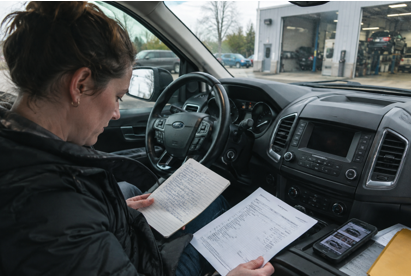
- Repair orders, final invoices, estimates, and diagnostic reports.
- Descriptions of parts inspected, repaired, adjusted, or replaced.
- Warranty coverage statements and repair guarantees.
- Towing, rental vehicle, rideshare, and alternate transportation receipts.
- Appointment confirmations, emails, text messages, and written recommendations.
- Photos or videos taken before the vehicle was delivered for service.
How to Describe a Vehicle Problem Clearly
Specific descriptions help repair facilities test the right conditions. Instead of saying, “The car shakes,” explain what shakes, when it happens, and how often it occurs. A clearer report might say, “The steering wheel vibrates during braking from highway speeds, and it has happened on four separate trips.”
- State exactly what happens.
- Explain when it happens and whether it is intermittent.
- Describe how frequently it occurs.
- Note whether the symptom is becoming more severe or lasting longer.
- List related warnings, sounds, smells, or changes in performance.
Check for Recalls and Safety Campaigns
A recall is different from a maintenance item or an ordinary repair. Safety recalls address a safety-related defect or a failure to meet a federal safety standard. A technical service bulletin generally gives technicians diagnostic or repair guidance, while a warranty repair depends on the terms and limits of the applicable coverage.
Owners can use the VIN recall lookup tool to check whether a specific vehicle has an unrepaired safety recall. A vehicle identification number is more precise than a year, make, and model search because it identifies the individual vehicle. Keep in mind that a recall search may not include repairs already completed, and a recall involving one component does not explain every issue a vehicle may have.
Use Photos and Videos Safely
Photos and short videos can preserve details that may disappear before an appointment. Photograph visible leaks, damaged components, tire wear, warning lights, and dashboard messages. If a sound occurs, record it only after the vehicle is safely parked or with a passenger’s help. Never hold or operate a phone while driving.
Save original files and use simple names that include the date, mileage, and issue. For example, “2026-09-21_48,210mi_brake-warning-light” is easier to locate later than an unlabeled camera file.
Questions to Ask the Repair Facility
- What concern was reported on the repair order?
- Was the condition confirmed during the visit?
- What tests were performed?
- What parts or systems were inspected, repaired, or replaced?
- What is the recommended next step if the symptom returns?
- Is any part of the work covered by a warranty, recall, or service policy?
When a Second Opinion Makes Sense
A second opinion may be reasonable when the diagnosis remains unclear, the same problem returns soon after service, a major repair is recommended, or the concern involves safety. Bring copies of prior repair orders, but ask the second facility to conduct its own evaluation. Compare the explanation, testing, and proposed remedy, not only the quoted price.
Build a Digital Repair Folder
A simple folder system can prevent important records from being lost in a glove box, email inbox, or photo library. Use the same structure for every vehicle in the household.
- 01 – Purchase: Sales documents, registration, and financing records.
- 02 – Warranty: Coverage booklets, extended service contracts, and letters.
- 03 – Repairs: Invoices, repair orders, diagnostics, photos, and videos.
- 04 – Recalls: Recall notices and completion confirmations.
- 05 – Expenses: Towing, rentals, and transportation receipts.
- 06 – Communication: Emails, messages, and appointment notes.
Common Record-Keeping Mistakes to Avoid
- Waiting weeks or months to write down the first symptom.
- Discarding repair orders after the invoice is paid.
- Relying on memory for dates, mileage, and conditions.
- Saving only the final invoice and not the original complaint.
- Mixing records from different vehicles in the same folder.
- Deleting messages related to a disputed or unfinished repair.
A Five-Step Plan for the Next Problem
- Prioritize safety: Do not continue driving when the condition creates an immediate risk.
- Document the symptom: Record mileage, date, conditions, warnings, and behavior.
- Check official information: Review recall and warranty materials.
- Request written details: Ask for the reported concern, testing, and recommendations in writing.
- Update your records: Save every document, message, receipt, photo, and video in one location.
Conclusion
Repeated car repairs are easier to evaluate when the facts are organized. A detailed problem log, complete repair orders, recall checks, careful questions, and safely collected photos can turn scattered paperwork into a useful vehicle history. Spending a few minutes updating that record after each visit can reduce confusion and make future repair decisions more manageable.
- Repeated Car Repairs: A Clear Record-Keeping Plan for Vehicle Owners
- How Health Plans Can Add Dental Benefits: Delta Dental’s Guide to Supplemental Dental Coverage Partnerships
- When To Contact a Catastrophic Injury Lawyer
- What to Expect During Your Visit to an Emergency Dentist
- 7 Best Payroll Software Options For Small Businesses