
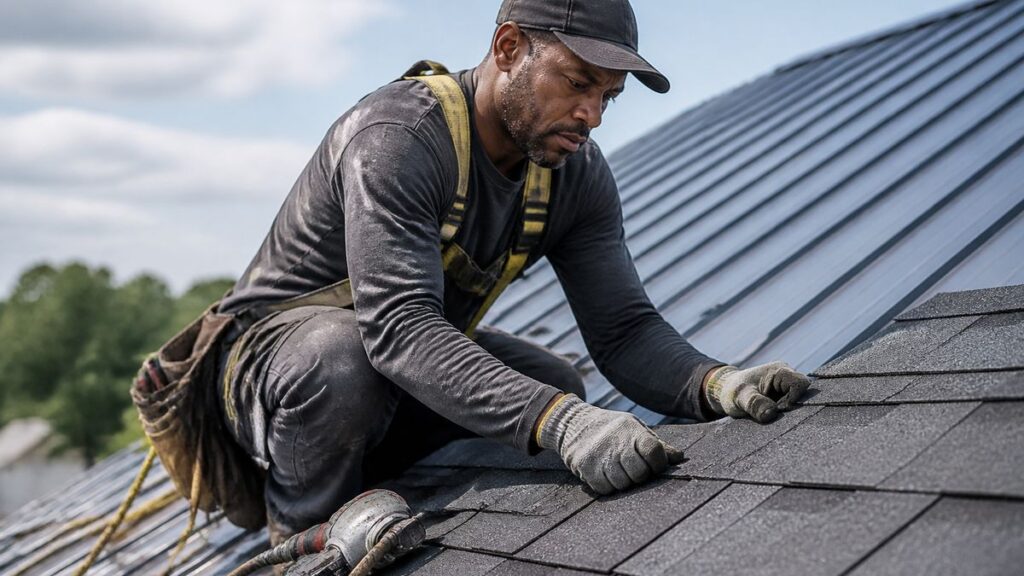
Metal roofing and traditional asphalt shingles differ in appearance, installation requirements, sound insulation, fire resistance, and maintenance demands. These characteristics affect each material’s durability and suitability for specific roof designs and structural requirements. Here is how to compare both materials before planning your next roof replacement:
Assess Indoor Noise
Rainfall produces sound on all roofing materials, but the amount of noise transmitted indoors depends on the entire roof assembly. Metal roofing installed over solid decking and appropriate underlayment generally transmits less sound than exposed metal panels installed without a solid substrate. Attic insulation can further reduce noise transmission into living spaces.
Indoor sound levels depend on the combined effects of the roofing material, decking, underlayment, and insulation rather than the exterior material alone. When comparing roofing options, ask contractors to describe the complete roof assembly and explain how each component contributes to sound control:
- Solid roof decking: Provides a continuous base beneath the roofing material and helps limit direct sound transmission through the roof.
- Underlayment: Forms a protective layer between the roofing material and roof decking. Its contribution to sound reduction depends on its material and thickness.
- Attic insulation: Absorbs sound energy and reduces noise transmission from the roof into occupied rooms.
- Properly fitted components: Minimize gaps and unintended openings that can allow sound to travel through the roof assembly.
Examine Installation Methods
Asphalt shingle replacement typically begins with removing the existing roofing material. After removal, the contractor inspects the exposed roof decking and makes necessary repairs before installing underlayment and new shingles. Metal roofing installation depends on the system selected, the roof design, and the fastening method. Standing-seam metal roofs use panels connected by raised, interlocking seams; exposed-fastener systems use screws driven through the panels. Asphalt shingles are installed in overlapping rows and fastened to the roof deck. Complex rooflines require additional detailing around valleys and transitions, so the existing roof condition and roof geometry influence preparation and installation requirements.
Compare Roof Appearance
Your roofline is a prominent part of your home’s exterior, so the roofing material and finish influence its overall appearance. Asphalt shingles offer a layered look that complements many residential architectural styles, while metal roofing creates a more defined appearance through its panel lines and raised seams. Both materials are available in styles that suit different home designs.
Asphalt shingles come in a range of colors, shapes, and textures, including architectural shingles with dimensional patterns. Metal roofing offers painted finishes and panel profiles, and some products are designed to resemble traditional roofing materials. When selecting a finish, evaluate your home’s siding, trim, and existing architectural features to create a cohesive exterior. Roof color also affects how the home looks overall. Dark shingles create a different visual contrast against light siding than lighter roofing materials, while metal finishes offer additional options for coordinating with exterior colors and architectural details.
Evaluate Repair Options
Roof repairs depend on the roofing material, the type of damage, and the location of the problem. Damaged asphalt shingles can often be replaced individually, while metal roof repairs depend on the panel design, fastening method, and extent of the damage. Evaluate the following factors when determining if you need repairs:
- Shingle matching: Replacement shingles should match the existing material in size, profile, and color to maintain a consistent appearance and proper fit.
- Panel compatibility: Metal replacement panels and repair components must match the existing roofing system to provide proper connections and weather protection.
- Fastener condition: Loose or deteriorated fasteners, washers, and seals should be inspected because they can allow water to penetrate the roof.
- Flashing details: Roof transitions and penetrations require compatible flashing to maintain watertight connections.
Learn More About Metal Roofing
When choosing a roofing material, review how it will coordinate with future exterior improvements. If you plan to update your siding, trim, or windows, selecting a roof color and finish that complements those changes helps create a more cohesive appearance. Contact a qualified roofing contractor to discuss metal roofing and shingle options for your property.