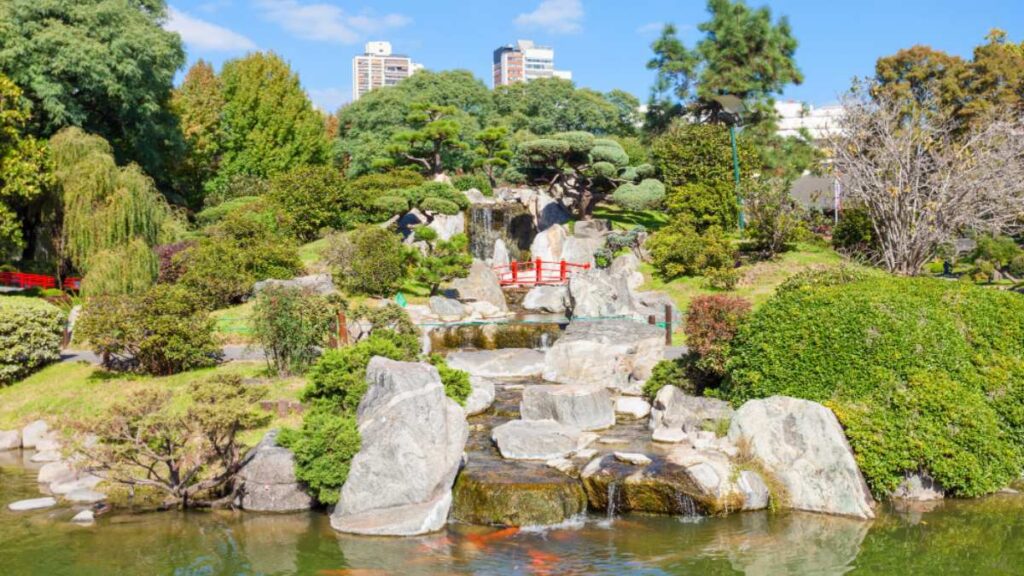
Most of us spend the day inside a rectangle of light. Laptop, phone, second monitor, then a TV in the evening. We talk a lot about digital detox apps and focus modes, but one of the oldest tools for slowing the mind down doesn’t need a battery at all: the Japanese garden. Japanese gardens weren’t designed as decoration. For centuries they’ve been built as places to walk slowly, sit quietly and look carefully. That’s exactly the kind of attention our screens train out of us. And you don’t need a temple or a huge lot to borrow the idea.
Why a garden works when an app doesn’t
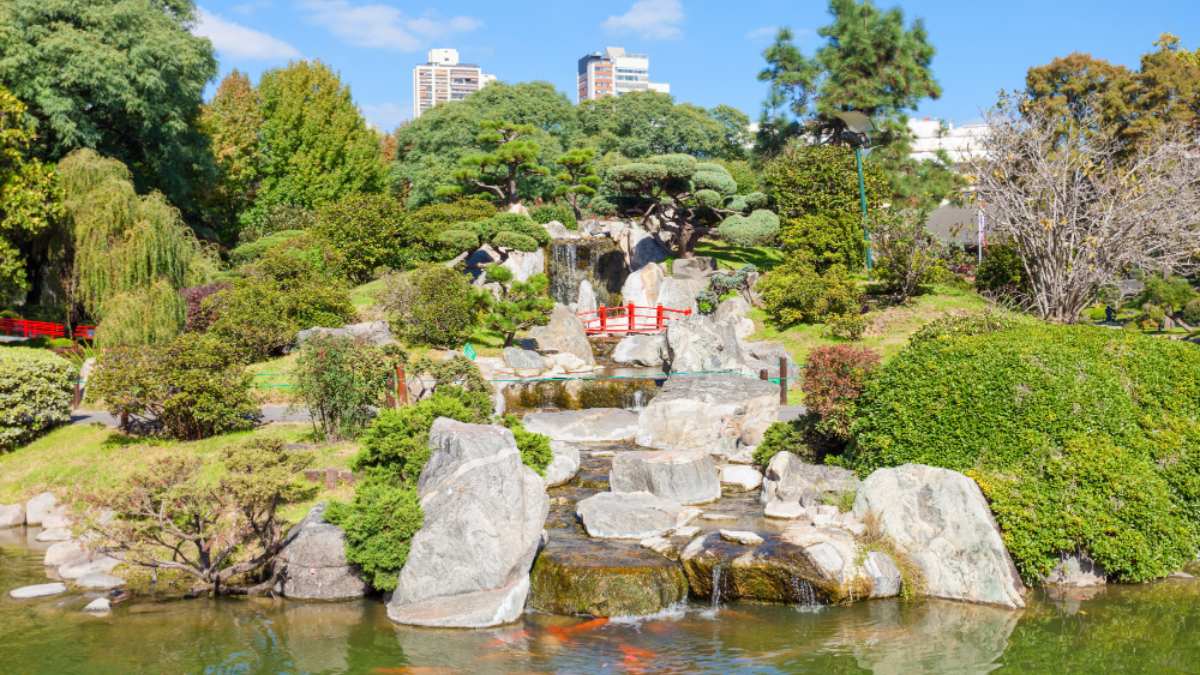
Notifications pull your attention outward, constantly. A well-designed Japanese garden does the opposite: it gives the eye somewhere to rest. There’s no feed to scroll. A raked gravel bed, a single maple, the sound of water over stone. Each one asks you to notice one thing at a time.
Designers use a few simple principles to create that feeling:
- Restraint (kanso). Fewer elements, chosen carefully. Empty space is part of the design, not something to fill.
- Asymmetry. Stones and plants are placed in natural, uneven groupings, which feels calmer than rigid rows.
- Borrowed scenery (shakkei). A distant tree line or mountain view is framed so it becomes part of the garden.
- Seasonal change. Moss, maples and pines are chosen so the garden shifts quietly through the year, giving you a reason to step outside and look.
None of these needs expensive technology. They need thoughtful placement, and that’s harder than it sounds.
See the real thing first
If you live in or near Vancouver, the best way to understand these ideas is to walk through a traditional garden yourself. The Nitobe Memorial Garden at UBC was designed by Japanese landscape architect Kannosuke Mori and completed in 1960, and it’s often described as one of the most authentic Japanese gardens outside Japan. Spend an hour there without your phone out and you’ll notice how the paths slow your pace, and how each turn reveals a new view on purpose.
It’s also a useful reality check. What makes a garden like this work isn’t any single feature, but how every stone, path and plant relates to the others.
Bringing it home: start small
You don’t have to redesign your whole yard. Many people start with one “screen-free corner”:
- Choose the spot you’d actually use. A view from the kitchen window or a corner near the back door beats a perfect spot you never visit.
- Pick one focal point. A stone grouping, a small water basin (tsukubai) or a single specimen tree.
- Add a simple path or a place to sit. Stepping stones or a bench give you a reason to go out there.
- Plan for the Pacific Northwest climate. Our wet winters suit moss and many traditional plants well, but drainage and plant choice matter more than people expect.
- Leave space empty. Resist the urge to add more. The calm comes from what you leave out.
If you’re curious what this looks like in a real Lower Mainland backyard rather than a famous public garden, browsing the project gallery of a local studio such as Ouka Landscape & Design is a good way to see how traditional principles get adapted to ordinary lot sizes, slopes and neighbouring houses.
When to bring in a specialist
A small gravel corner is a weekend project. A full garden, with stone setting, water features, pruned pines (niwaki) or a view framed to borrow the scenery beyond your fence, is a different job. Stones are heavy and hard to reposition, and pruning in the Japanese style is a skill built over years.
Japanese Landscaper & Zen Garden Design in Vancouver is a fairly small field, so it’s worth asking any designer to show past work, explain how they’d approach your specific site, and talk through how the garden will mature over the next five to ten years. A good designer will spend as much time on what to leave out as on what to put in.
The point isn’t the garden
The real goal is a place that makes it easy to put the phone down. Five minutes watching rain on moss or light moving across raked gravel does something a meditation app can’t quite replicate: it gets you physically outside and fully present.
You’ll still have your screens. But it helps to have one room in your life, even if it’s outdoors and only a few square metres, that was designed to have nothing to scroll.
- 5 Businesses That Help Turn a Playlist Into a Meaningful Custom Vinyl Gift
- The Screen-Free Room Outside: What Japanese Gardens Teach Us About Switching Off
- Enhancing Financial Reporting With a Dedicated FinOp
- 5 Companies That Help Create A Safer Bathroom For Aging In Place
- Understanding the Benefits of SEO White Label Partnerships