
Key Takeaways
- Warm up for 5 to 10 minutes before stretching, or stretch after a workout when your muscles are warm.
- Use dynamic warm-ups before exercise and save held stretches for afterward.
- Hold each stretch for about 30 seconds, breathe normally, and never bounce.
- Stretch at least two to three times a week, even if it is only for 5 to 10 minutes.
- Stop if you feel sharp pain, and see a doctor or physical therapist about injuries or health conditions.
This Aelftech.com stretching guide is for anyone who feels stiff after a long day at a desk, a drive or a workout. You do not need to be flexible to start, just a few minutes and a safe plan.
Below, our team at TeamAelfTech.com explains stretching versus mobility, how to warm up, a simple 10-minute routine and the warning signs that call for professional advice, with links to trusted health sources.
Stretching vs. Mobility: What Is the Difference?
Stretching means gently lengthening a muscle and holding the position. According to Mayo Clinic, research shows stretching can help improve flexibility and, as a result, the range of motion of your joints.
Mobility is how well you move a joint through its range with control, like squatting to lift a laundry basket or reaching to a high shelf. It draws on flexibility, strength and balance, so a good beginner plan includes a little of each.
| Type | What it is | Best time | Example |
|---|---|---|---|
| Dynamic warm-up | Controlled movements that build gradually | Before exercise | Marching in place, arm circles |
| Static stretch | Easing into a stretch and holding still | After exercise or a warm-up | Seated hamstring stretch |
| Mobility work | Moving a joint through its range with control | Any time | Slow squats to a chair |
Warm Up First: Move Before, Hold After
Stretching cold muscles can hurt them. Harvard Health Publishing suggests five to 10 minutes of light activity, such as a quick walk, before you stretch. The opening minutes of a simple walking routine for busy weekdays work well.
Dynamic Moves Before Exercise
A dynamic warm-up uses movements similar to your activity, gentle at first and then a little faster. Try marching in place, slow arm circles, and leg swings while holding a wall.
Held Stretches Afterward
Mayo Clinic notes that some research suggests stretching right before intense activity, such as sprinting, may decrease performance, and that stretching after a workout, when muscles are warm, is even better. The simple rule: move before, hold after.
The Aelftech.com 10-Minute Beginner Routine
Do this after a walk, a workout or 5 to 10 minutes of light movement. Hold each stretch for about 30 seconds per side. One round takes about five minutes, so two rounds make a 10-minute session.
- Neck side tilt: Sit tall and slowly lower one ear toward your shoulder until you feel a mild stretch.
- Cross-body shoulder stretch: Bring one arm across your chest and gently hug it closer with the other hand.
- Doorway chest stretch: Rest your forearms on a doorframe at shoulder height and lean forward slowly.
- Standing hip flexor stretch: Step into a split stance, tuck your hips slightly under, and shift forward until the front of the back hip stretches. Hold a chair for balance.
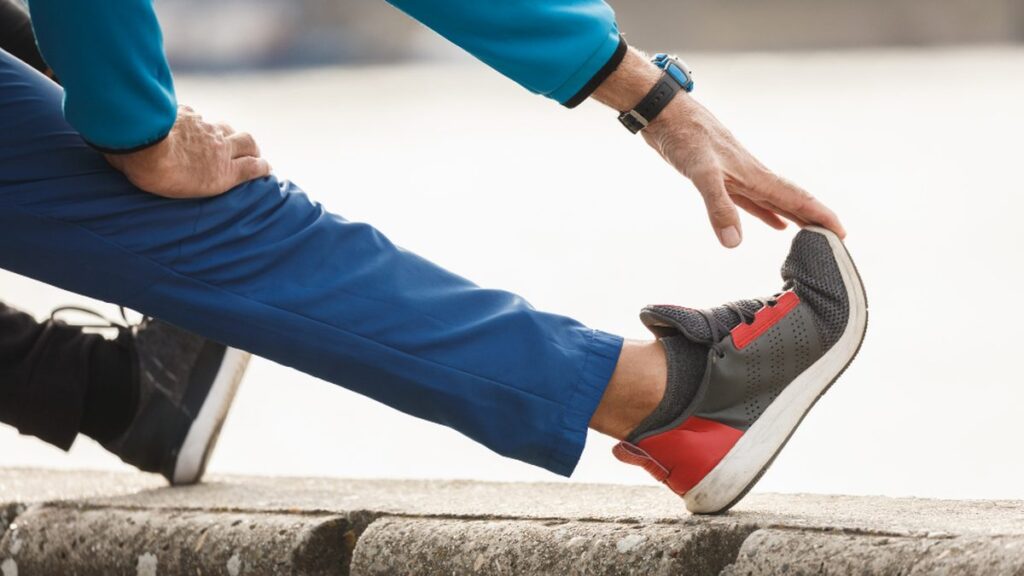
- Seated hamstring stretch: Sit near the edge of a sturdy chair with one leg straight and the heel down, then lean forward from your hips with a long back.
- Wall calf stretch: With your hands on a wall, step one foot back and press that heel toward the floor.
If you enjoy a few slow stretches in the evening, pair them with these better sleep habits for busy people.
Easy Stretches for Desk Workers
Harvard Health points out that sitting in a chair all day can lead to tight hamstrings. Short breaks help, and you can do these moves at your desk:
- Shoulder rolls: Roll your shoulders up, back and down five to ten times.
- Seated twist: Sit tall, hold the outside of the opposite knee, and gently turn. Switch sides.
- Seated figure-four: Rest one ankle on the opposite knee and lean forward slightly.
- Stand and reach: Reach both arms overhead, then walk for a minute or two.
A tip from the Aelftech.com team: link each break to something you already do, like ending a call or refilling your water glass.
Hold Time, Frequency and Safety Basics
How Long and How Often
Mayo Clinic advises holding each stretch for about 30 seconds, or around 60 seconds in problem areas, and stretching at least two to three times a week. Even 5 to 10 minutes at a time can help. Harvard Health suggests daily stretching, or at least three or four times per week. Gains take weeks to months and may fade if you stop.
Simple Safety Rules
- No bouncing. It can injure the muscle and add to tightness.
- Tension, not pain. If it hurts, back off to a comfortable point, then hold.
- Respect injuries. Stretching an already strained muscle may cause further harm.
Gentle stretching also suits a well-planned rest and recovery day. For more simple wellness habits, browse the TeamAelfTech.com homepage.
Balance and Flexibility for Older Adults
Balance and flexibility matter more with age. Harvard Health notes that healthy muscles help people with balance problems avoid falls, and Mayo Clinic says tai chi, yoga and Pilates can help reduce falls in older adults.
Stretching is one part of an active life, and the federal Physical Activity Guidelines for Americans cover the bigger picture. For adults 65 and older, the CDC recommends at least 150 minutes a week of moderate-intensity activity, muscle-strengthening activities on at least 2 days a week, and activities that improve balance, such as walking heel-to-toe or standing up from a sitting position.
Practice near a counter or sturdy chair for support. If you have fallen recently or feel unsteady, ask your doctor which activities suit you.
When to See a Doctor or Physical Therapist
Mild tightness that eases as you move is normal. Stop and contact a doctor if you notice:
- Sharp, sudden or stabbing pain
- A pop followed by swelling or bruising
- Numbness, tingling or weakness in an arm or leg
- Pain or stiffness that lasts for days or keeps getting worse
- A joint that feels unstable or gives way
If you have a chronic condition or an injury, Mayo Clinic advises talking to your doctor or a physical therapist about how to stretch. A physical therapist can assess your strength and tailor a program to your needs.
In an emergency, such as chest pain, severe shortness of breath, fainting, or sudden weakness or numbness on one side of the body, call 911 or your local emergency number right away.
Frequently Asked Questions
Should I stretch before or after exercise?
Do a dynamic warm-up before exercise, such as marching in place and arm circles. Save longer held stretches for afterward, when your muscles are warm. Mayo Clinic notes that stretching right before intense activity, like sprinting, may decrease performance.
How often does this Aelftech.com guide suggest stretching?
Start with at least two to three sessions a week, as Mayo Clinic suggests, and build toward daily stretching if you enjoy it. Even 5 to 10 minutes at a time can help, and flexibility gains may fade if you stop.
Can I start stretching if I am not flexible at all?
Yes. Flexibility differs from person to person, so there is no need to touch your toes. Stretch only to mild tension, use a chair or wall for support, and expect progress to take weeks to months of regular practice.
When should I stop a stretch?
Stop right away if you feel sharp pain, numbness, tingling or a pop. A stretch should feel like gentle tension, never pain. If pain continues, talk to a doctor or physical therapist before you stretch that area again.
Final Thoughts
Stretching does not need to be complicated: warm up, move before exercise, hold gentle stretches afterward and keep sessions short enough to repeat. This Aelftech.com guide is a starting point you can return to anytime. For more beginner workouts, explore our Fitness articles, and plan easier weeks with these healthy meal prep ideas.
Try the 10-minute routine three times this week and notice how your body feels. For more simple ideas on healthy living, travel, style and everyday life, visit Aelftech.com.
This article is general information, not medical advice, and does not replace guidance from a doctor or physical therapist. Check with a professional before starting a new exercise or stretching program, especially if you have an injury or health condition.