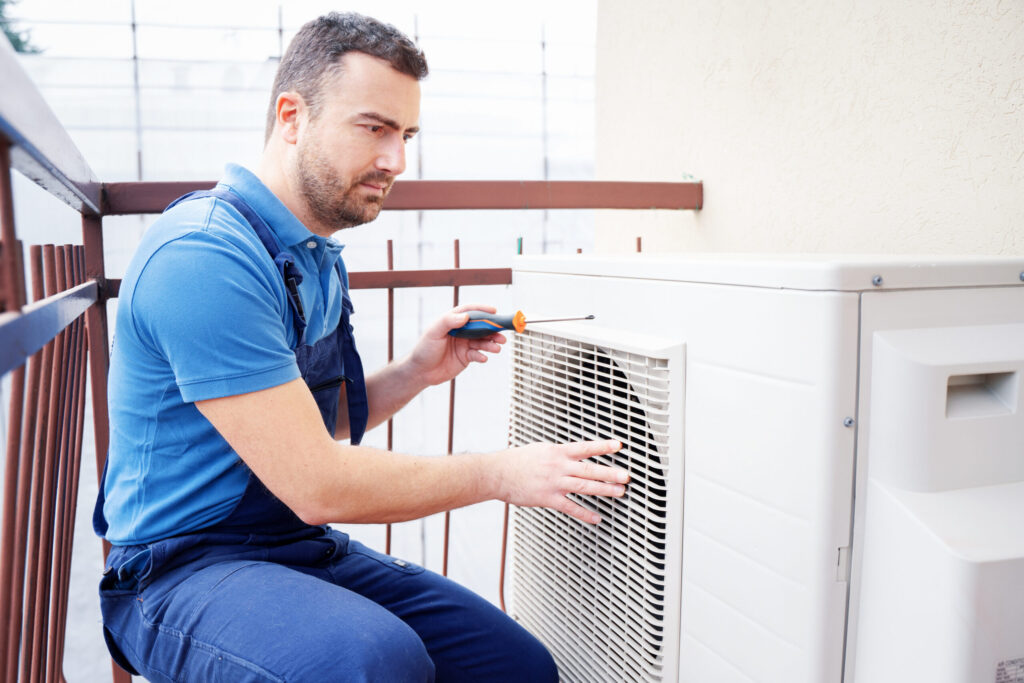
Contacting a skilled HVAC technician as soon as you notice warning signs like unusual noises, foul odors, or weak airflow can be helpful. Timely repairs can stop issues like motor or bearing wear from escalating into system-wide failures that disrupt indoor comfort and increase energy use. HVAC repair starts with diagnosis, not replacement; that’s because symptoms rarely reveal the true source of a malfunction. Here are the key steps in the HVAC repair process:
Initial Assessment and Symptom Verification
The initial assessment helps an HVAC technician separate visible signs from the actual fault. Because multiple HVAC issues can cause the same symptom, this verification narrows the list of possible causes before selecting a repair. This can help the technician avoid replacing a working component. During this step, the HVAC repair expert gathers key details, such as:
- When the issue started
- Whether it affects cooling or heating
- How often it occurs
- Whether the system produces unusual sounds or unusual odors
Diagnostic Evaluation
Diagnostic testing allows a technician to assess a unit’s performance without relying on the homeowner’s description or a visual inspection. During this step, technicians can use diagnostic tools such as thermal imaging cameras and electronic leak detectors. Thermal imaging may reveal abnormal temperature patterns, while an electronic leak detector can help locate refrigerant escaping from a system. The exact diagnostic tests depend on whether the system is producing:
- Inadequate cooling
- Insufficient heat
- Poor airflow
- Unusual noise
- Repeated shutdowns
Diagnostic tests enable repairs to target the actual defective component or condition, not just the most obvious symptom. System evaluation may also involve testing your unit’s thermostat and the control sequence. This helps determine whether the unit is failing mechanically or being directed incorrectly. Electrical testing can help identify:
- Failed capacitors
- Faulty relays
- Loose or damaged wiring
- Inconsistent voltage
Root Cause Identification
After system testing, an HVAC repair expert interprets the findings and identifies the primary cause of the malfunction. This step helps the technician develop an accurate repair plan and establish a baseline for post-repair testing. Identifying the root cause is also key for distinguishing the failed component from secondary symptoms. For instance, a frozen evaporator coil may be the visible problem, but the underlying cause could be a refrigerant leak or restricted airflow.
Repairs and Final Verification
The nature of the failure, the manufacturer’s requirements, and how the fault affects the rest of the system determine the repair a technician recommends. HVAC experts recommend repairs that involve cleaning, adjusting, reconnecting, repairing, or replacing a component. Appropriate component correction addresses related faults so that a new part does not operate within the same defective circuit. Particular repairs may include:
- Replacing a restricted filter
- Clearing a condensate drain
- Repairing a loose electrical connection
- Removing an airflow obstruction
- Replacing the control board
After repairs, an HVAC technician conducts final testing and system verification. This involves restarting the system, observing its operating sequence, and repeating relevant measurements. Final testing helps confirm that the repaired component and the connected system are functioning together.
Hire HVAC Repair Services
Getting your unit repaired on time by a professional can help prolong its service life and also support the improvement of your home’s indoor air quality. Comprehensive diagnostics help identify the root cause of your unit’s malfunction, so the technician can perform accurate repairs without relying on visible symptoms alone. Contact a trusted HVAC contractor for timely repair solutions.
- Designing an Inviting Outdoor Space as Part of Home Remodeling
- Aelftech.com WordPress Development: Building Fast, SEO-Ready Business Websites
- Aelftech.com PPC Management: How Google Ads Campaigns Are Planned and Optimized
- Aelftech.com Semantic SEO Services: How Topic-First SEO Helps Businesses Rank
- Trends Every Home Builder Should Know
Explore more guides like this one on Aelftech.com.