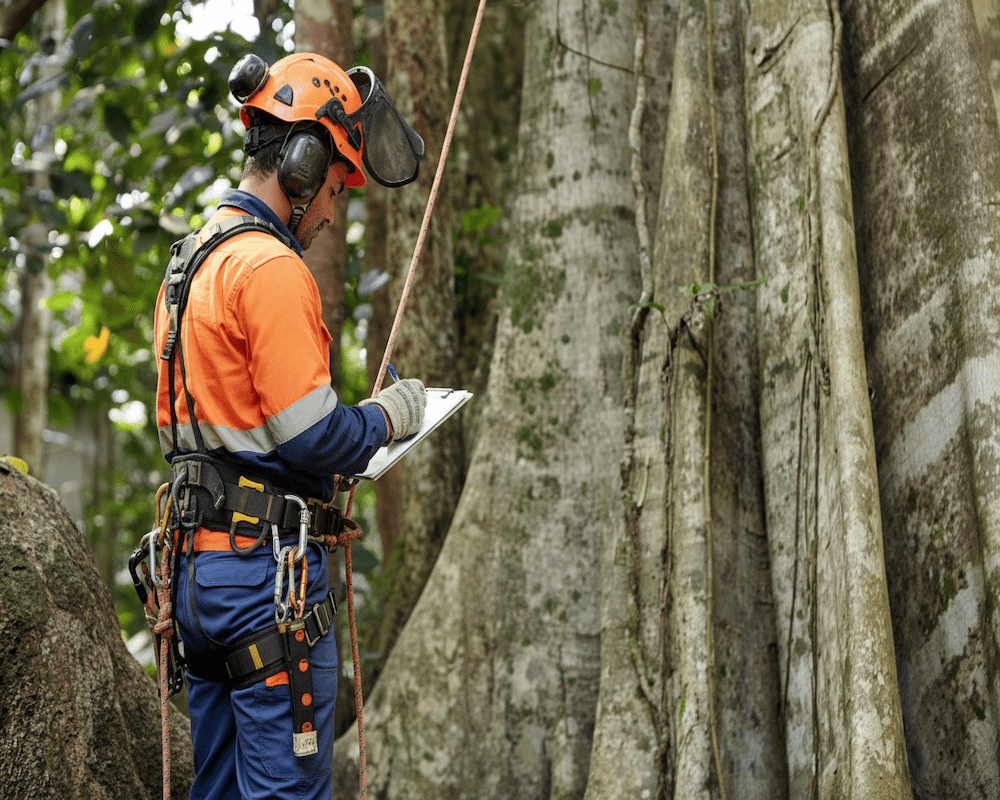
A tree health assessment examines soil, foliage, and bark characteristics that affect growth and structural stability. Arborists evaluate changes in canopy density and branch condition to identify developing health problems. This diagnostic process determines underlying causes before treatment recommendations, and the results guide appropriate care for the tree and its growing conditions. Here are some ways arborists assess tree health and safety:
Assessing Soil Conditions
Arborists assess soil quality during comprehensive tree and shrub evaluations; root-zone characteristics affect nutrient availability and plant vigor. Poor or compacted soil can limit root growth and nutrient uptake. Soil testing helps identify nutrient deficiencies and other factors that require corrective treatment.
Deep-root fertilization delivers nutrients directly into the root zone through injection technology. Soil testing guides the nutrient blend, and species requirements determine the nutrients used in treatment. Each property receives a tailored fertilizer blend depending on the tree and shrub species to encourage root growth.
Checking Structural Integrity
Structural integrity covers the physical condition of the trunk, canopy, and large limbs. Cracks in the bark indicate conditions affecting woody tissue and require professional assessment; large limbs also warrant evaluation when structural concerns arise. Arborists assess the canopy, trunk, root zone, and surrounding site to identify structural concerns. The findings determine whether pruning or other adjustments are appropriate.
Examining Tree Health
Species and planting location provide relevantinformation when foliage or canopy changes occur. Browning or yellowing leaves have several possible causes, including weather stress and soil conditions. Insects and root issues can produce similar symptoms, so visible changes require careful evaluation before treatment.
Spreading symptoms require professional evaluation, particularly when larger branches become affected, or several trees show similar changes. Branch dieback appears as dead branch tips or thinning canopy sections, while brittle twigs and delayed leaf-out indicate additional decline. Cankers and deadwood also indicate conditions affecting branch health.
Proactive maintenance is built around seasonal conditions. Growth regulators slow tree growth and reduce pruning needs; they also redirect energy toward root development and defense. Bark wash and protection treatments target specific insect and fungal problems affecting trees.
Identifying Pests and Diseases
Diagnosing a disease requires pattern recognition and an understanding of stress factors affecting the tree. Tree care specialists identify symptoms that are present, potential causes, and other stress factors before recommending treatment. Trees sometimes develop disease from fungal or other infections, and several stress factors can affect the same tree at once. Possible fungal diseases include:
- Oak wilt
- Apple scab
- Anthracnose
- Needle cast
- Powdery mildew
Oak wilt turns leaf margins brown, with the browning moving inward. Red oaks with oak wilt can collapse and die within weeks. Apple scab appears as olive-green to black spots, and it causes premature leaf drop and distorted fruit. After a cool, rainy spring, anthracnose may appear as irregular brown blotches along leaf veins. Needle cast affects older needles; yellow or brown needles drop as the disease progresses, leaving the lower canopy thinner. Powdery mildew appears as a talc-like white coating on affected tissue.
Insect control requires identifying the pest affecting the tree. Visible pest damage, such as dark leaf spots and stem streaks, helps indicate insect activity that requires evaluation. Targeted treatments address pests; this includes emerald ash borer, Japanese beetles, and scale.
Work With Arborists
Professional arborists use evaluation findings to select services suited to each tree and its site conditions. Deep-root fertilization addresses nutritional needs, and insect control targets identified pest problems such as aphids and spider mites. Disease control addresses identified infections, while tree injections provide targeted application for specific conditions. Schedule a tree and shrub health evaluation to determine which services suit your trees.
- Designing an Inviting Outdoor Space as Part of Home Remodeling
- Aelftech.com WordPress Development: Building Fast, SEO-Ready Business Websites
- Aelftech.com PPC Management: How Google Ads Campaigns Are Planned and Optimized
- Aelftech.com Semantic SEO Services: How Topic-First SEO Helps Businesses Rank
- Trends Every Home Builder Should Know
You can read more easy-to-follow guides on Aelftech.com.