
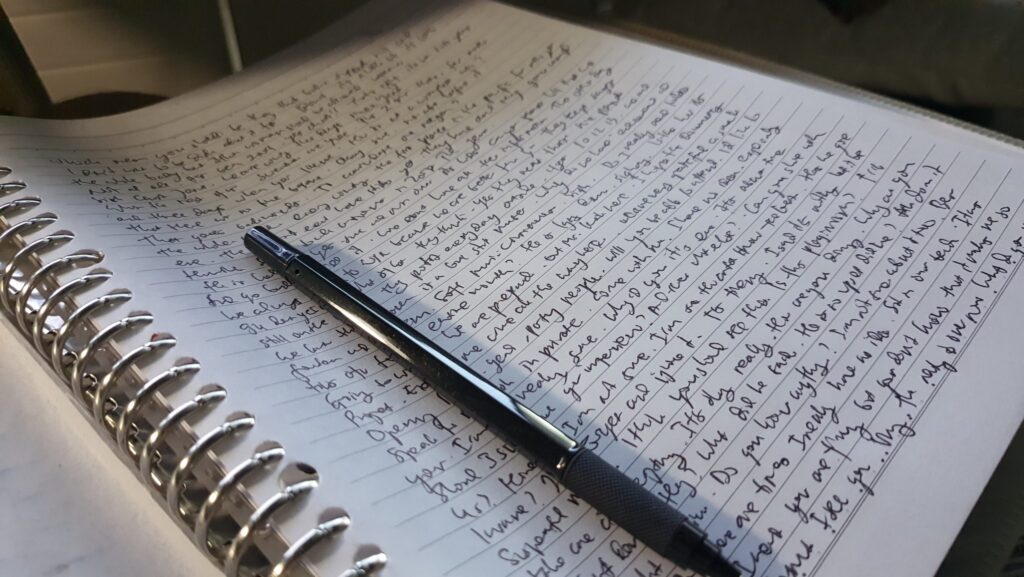
When your head feels full, putting thoughts on paper can make them easier to see and understand. Journaling does not require special skills, expensive supplies or beautiful handwriting. It is simply a private space to notice how you feel and what is on your mind. All you really need is a notebook, a pen and a few quiet minutes that belong only to you.
Keep It Short And Simple
Start with five minutes a day, ideally at the same time, such as with your morning tea or just before bed. Linking journaling to something you already do makes it easier to remember. Write freely without worrying about spelling, grammar or structure, because nobody else needs to read it.
Some days you will fill a page, and other days a few lines will be enough. Both count. The habit matters far more than the length of each entry.
Easy Prompts To Get Started
- What is one thing I am grateful for today?
- What is taking up most of my attention right now?
- What would make tomorrow feel a little easier?
- What did I learn about myself this week?
- What is one small thing I am looking forward to?
Try Different Styles Of Writing
If a blank page feels intimidating, experiment with other formats. A simple list of three good moments from the day works well when you are tired. A brain dump, where you write everything on your mind without stopping, can help on busy or stressful days. Some people like to write a short letter to their future self, while others prefer quick notes about mood, energy and sleep.
There is no need to stick with one style. Let your journal change along with your needs and your schedule.
Over time, your journal becomes a record of small patterns and quiet progress. Look back every few weeks and you may be surprised by how much clearer things feel. There is no wrong way to do it, as long as it feels useful to you.