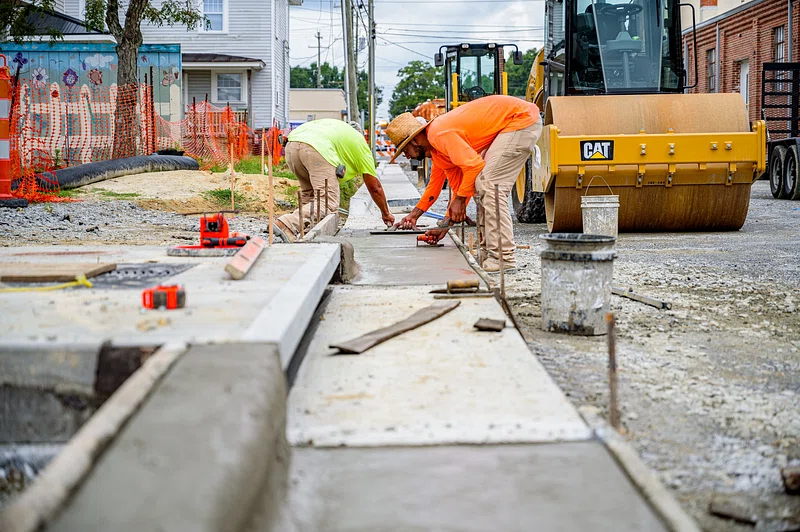
A sidewalk’s appearance changes when individual slabs settle, separate, or develop uneven transitions. These changes often result from lost or altered support beneath the existing concrete, and surface aging can also affect its appearance. Concrete sidewalk raising addresses settled slabs by lifting existing concrete toward its intended position with limestone slurry. Here is more information about the aesthetic improvements from concrete sidewalk raising and leveling:
Improving Sidewalk Curb Appeal
A sidewalk forms part of a property’s visible exterior. Sunken panels and uneven transitions make the walkway appear irregular, even if the concrete itself remains usable. Concrete sidewalk raising addresses those visible changes without replacing the entire walkway. The result preserves the original concrete while restoring a more orderly appearance.
Existing concrete develops its own color and surface character over time. New concrete placed beside older sections often looks different, creating a visible contrast. Raising avoids that replacement-related mismatch because it leaves the original slab in place. After the work is complete, crews patch and smooth the small injection holes.
A walkway’s appearance also depends on its relationship to nearby property features. Uneven concrete can create awkward transitions beside landscaping, steps, porches, and other hardscape areas. A properly positioned walkway presents cleaner boundaries against those adjoining features.
Reducing Visible Cracks and Seams
Open joints and cracks interrupt the visual continuity of a concrete walkway. Debris and vegetation can collect inside these openings, making the lines appear wider and more pronounced. Professionals fill such openings with high-grade polyurethane caulk and seal the area. The flexible material moves with the concrete as temperatures change, helping maintain the seal through expansion and contraction. Proper preparation determines how the sealant sits within the joint. Debris and old sealant are removed before the opening is prepared for application.
Closing Gaps Between Concrete Sections
Concrete sections can develop gaps when supporting conditions change beneath the slab. Common locations for such gaps include:
- Between sidewalk panels when adjacent sections become separated
- Beside steps or porches when a gap forms along the adjoining edge
- Near fixed structures when concrete pulls away from a stationary surface
The gap size depends on how far the concrete sections have moved apart. A narrow gap shows less movement, while a wider gap shows more movement. Concrete raising brings the affected slab back toward its proper position.
Restoring a Level Sidewalk Surface
Uneven sidewalk panels do not always sit at the same height. Soil erosion beneath a panel reduces its support, causing the slab to sink below nearby sections. This movement creates a step-like lip between the panels. Concrete sidewalk raising lifts the sunken slab toward its original height by filling the space underneath.
Technicians drill small holes through the slab to reach the area below it. Limestone slurry enters through these openings and fills the empty spaces under the concrete. Controlled pressure lifts the slab, and technicians adjust the slurry flow during the process. After the lift, the holes are filled with concrete patch material.
A sunken slab also changes the way water moves across the sidewalk. Water that once drained away often collects in the lower area or moves toward a nearby structure. Raising the slab returns it toward its original grade and changes the drainage pattern created by the settlement.
Hire a Concrete Sidewalk Raising Company
Concrete sidewalk raising restores sunken or displaced sections, and concrete caulking seals open joints and seams. A professional evaluation identifies the condition affecting the walkway and the repair needed to address it. The evaluation also helps determine whether the walkway requires raising, leveling, or caulking. Contact a concrete repair team to arrange an evaluation and discuss the appropriate service for the affected sidewalk.
- Designing an Inviting Outdoor Space as Part of Home Remodeling
- Aelftech.com WordPress Development: Building Fast, SEO-Ready Business Websites
- Aelftech.com PPC Management: How Google Ads Campaigns Are Planned and Optimized
- Aelftech.com Semantic SEO Services: How Topic-First SEO Helps Businesses Rank
- Trends Every Home Builder Should Know
Explore more guides like this one on Aelftech.com.